J.R.R. Tolkien
English author of The Hobbit and The Lord of the Rings.

James2813 · CC BY-SA 4.0
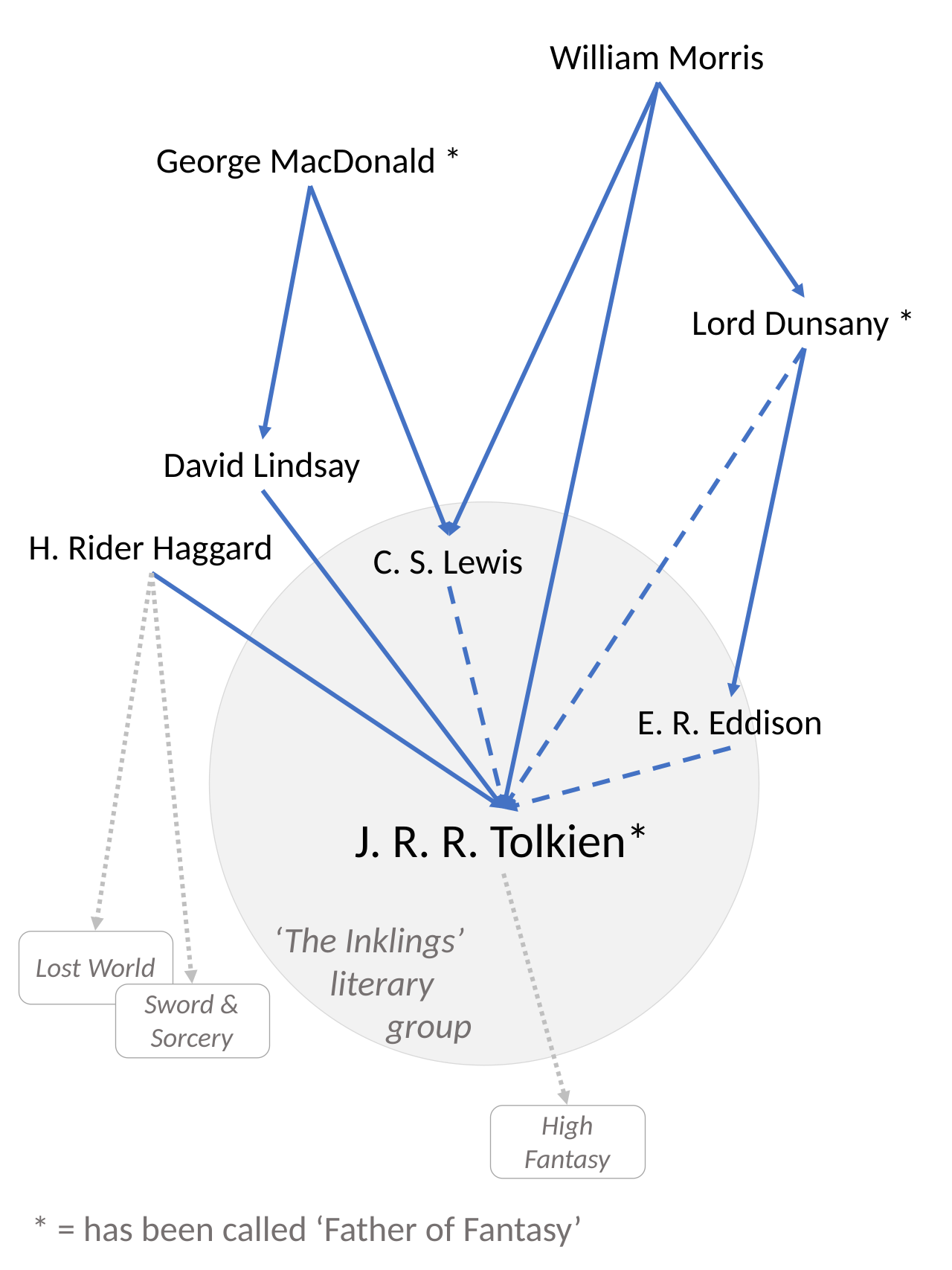
John Ronald Reuel Tolkien (3 January 1892 – 2 September 1973) was an English writer and a scholar of philology. His most famous works are the high fantasy novels *The Hobbit* (1937) and *The Lord of the Rings* (1954–1955). The enormous success of these books sparked a deep and lasting interest in fantasy as a genre, earning him the widespread label of the "father" of modern fantasy literature.
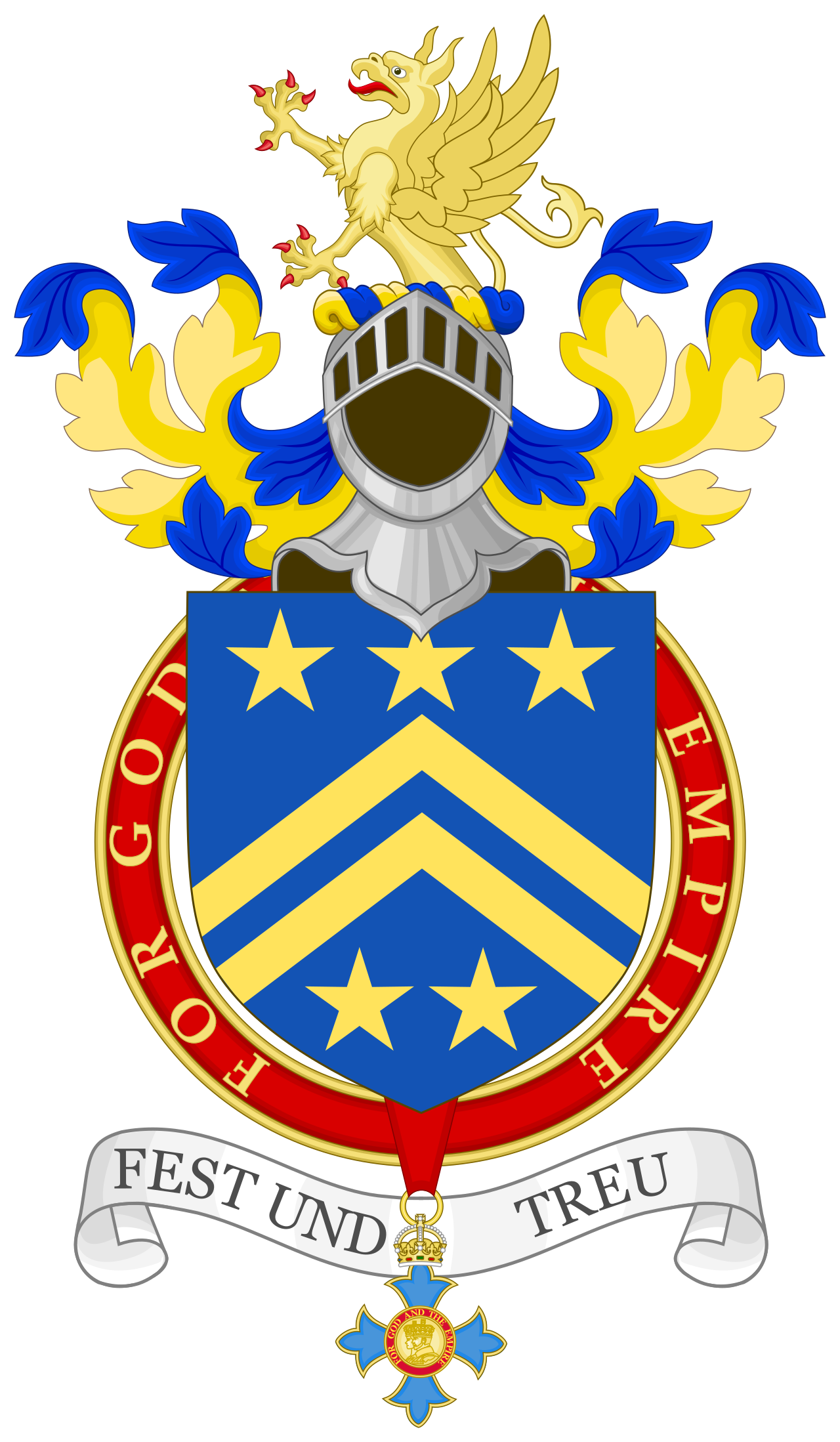
Tolkien spent two decades as a professor at the University of Oxford. From 1925 to 1945, he held the Rawlinson and Bosworth Professorship of Anglo-Saxon and was a Fellow of Pembroke College. He then moved to become the Merton Professor of English Language and Literature and a Fellow of Merton College, a post he kept from 1945 until his retirement in 1959. A devout Catholic, he was also a close friend of C. S. Lewis and a fellow member of the Inklings, an informal literary discussion group. On 28 March 1972, Queen Elizabeth II appointed him a Commander of the Order of the British Empire.
After Tolkien’s death, his son Christopher edited and published a number of works drawn from his father’s extensive notes and unfinished manuscripts, most notably *The Silmarillion*. These writings, together with *The Hobbit* and *The Lord of the Rings*, form a connected body of tales, poems, invented languages, fictional histories, and literary essays set in a fantasy world called Arda, and within it, Middle-earth. Between 1951 and 1955, Tolkien himself referred to the larger part of this material as his "legendarium." He is widely considered one of the most influential authors of all time.
**Biography**
**Ancestry**
Tolkien was English and identified as such. His immediate paternal ancestors were middle-class craftsmen in London and Birmingham who made and sold clocks, watches, and pianos. The Tolkien family originally came from the East Prussian town of Kreuzburg, near Königsberg, a settlement founded during the medieval German eastward expansion. His earliest known paternal ancestor, Michel Tolkien, was born there around 1620.
In 1792, John Benjamin Tolkien and William Gravell took over the Erdley Norton manufacture in London, which then sold clocks and watches under the name Gravell & Tolkien. John Benjamin’s brother, Daniel Gottlieb Tolkien, became a British citizen in 1794, but John Benjamin himself apparently never did. Other German relatives later joined the two brothers
- born
- 3 January 1892, Bloemfontein, Orange Free State
- died
- 2 September 1973
- field
- Writer, academic philologist
- nationality
- English
- known_for
- The Hobbit, The Lord of the Rings, legendarium of Middle-earth
Lore & Background
Tolkien was born in Bloemfontein in the Orange Free State to Arthur Reuel Tolkien, an English bank manager, and his wife Mabel. After his father's death from rheumatic fever, his mother moved the family to England, where she taught him at home, instilling a love of botany and languages. He could read by age four and later attended King Edward's School in Birmingham. His mother converted to Roman Catholicism in 1900, and after her death in 1904, her friend Father Francis Xavier Morgan became his guardian.
Tolkien held academic positions at the University of Oxford: from 1925 to 1945 he was the Rawlinson and Bosworth Professor of Anglo-Saxon and a Fellow of Pembroke College, then from 1945 until his retirement in 1959 he was the Merton Professor of English Language and Literature and Fellow of Merton College. He was a devout Catholic and a close friend of C. S. Lewis, co-member of the Inklings literary discussion group. He was appointed a Commander of the Order of the British Empire on 28 March 1972.
After his death, his son Christopher published works based on his notes, including The Silmarillion. These, together with The Hobbit and The Lord of the Rings, form a connected body of tales, poems, invented languages, and essays about the fantasy world Arda and Middle-earth. Between 1951 and 1955 Tolkien applied the term 'legendarium' to the larger part of these writings.
Reader's Guide
Tolkien's works, particularly The Hobbit and The Lord of the Rings, achieved tremendous success and profoundly influenced the fantasy genre. While many other authors had published fantasy before him, his books ignited a surge of interest that led to an avalanche of new fantasy books and authors. This has resulted in his popular identification as the 'father' of modern fantasy literature, and he is widely regarded as one of the most influential authors of all time. His legendarium, including posthumously published works, created a richly detailed fictional world with invented languages and histories. His academic background as a philologist informed his creation of languages and mythologies. The enduring popularity of his works has cemented his legacy as a central figure in 20th-century literature.
Did You Know?
- Tolkien was bitten by a large baboon spider as a child, an event some believe echoed in his stories, though he admitted no actual memory of it as an adult.
- He mistakenly believed his surname derived from the German word tollkühn, meaning 'foolhardy', and jokingly inserted himself as a cameo under the translated name Rashbold.
- Tolkien learned Esperanto some time before 1909, and his earliest known invented alphabet appears in a notebook from around June 1909.
- His mother Mabel Tolkien died of acute diabetes in 1904, about 17 years before insulin was discovered.
The Scholar at Oxford
Tolkien spent the central decades of his professional life within the walls of the University of Oxford, where he held two successive chairs that reflected the breadth of his linguistic and literary interests. From 1925 through 1945 he occupied the Rawlinson and Bosworth Professorship of Anglo-Saxon while serving as a Fellow of Pembroke College. In 1945 he transitioned to the Merton Professorship of English Language and Literature, taking up a fellowship at Merton College, a post he maintained until his retirement in 1959. Beyond the lecture hall, his intellectual life was deeply communal. A devout Catholic, he counted C. S. Lewis among his closest friends, and the two men shared membership in the Inklings, an informal gathering of writers who met to read and critique one another's work. In recognition of his contributions, Queen Elizabeth II appointed him a Commander of the Order of the British Empire on 28 March 1972, a honour that acknowledged a career spent as much in the study of old languages as in the creation of new worlds.
The Legendarium and Its Afterlife
The body of work Tolkien left behind far exceeds the two novels most readers first encounter. The Hobbit appeared in 1937, followed by The Lord of the Rings in 1954 and 1955, but these were merely the most visible layers of a vast interconnected project. Between 1951 and 1955 Tolkien himself applied the term legendarium to the broader collection of writings that encompassed tales, poems, fictional histories, invented languages, and literary essays, all set within a fantasy world he called Arda, with Middle-earth occupying its most familiar region. After his death in 1973, the task of bringing this material to light fell to his son Christopher, who sifted through his father's extensive notes and unpublished manuscripts to produce a series of published works, most notably The Silmarillion. Together, these posthumous volumes and the two earlier novels form a single, sprawling mythological architecture that continues to be read, studied, and expanded upon by scholars and fans worldwide.
Father of Modern Fantasy
Although fantasy writers had been publishing imaginative works well before Tolkien's time, it was the extraordinary commercial and cultural success of The Hobbit and The Lord of the Rings that fundamentally shifted the literary landscape. Those two books ignited a profound and sustained public appetite for the genre, and in the years that followed the publishing world was flooded with an avalanche of new fantasy titles and aspiring authors eager to build their own secondary worlds. This seismic shift in reader expectations and market demand led to Tolkien's popular identification as the father of modern fantasy literature, a label that captures his role as the figure who proved the genre could command the same serious literary attention as any other form of storytelling. His standing extends well beyond the fantasy shelf; he is widely regarded as one of the most influential authors of all time, a testament to how a philologist's deep engagement with language, mythology, and narrative structure could reshape the way an entire generation of readers experienced fiction.
A Childhood Shaped by Loss and Landscape
Tolkien's early years were marked by dramatic upheaval. Born in Bloemfontein, South Africa, in January 1892, he was just three when his father, an English bank manager, died of rheumatic fever before he could reunite with his family. His mother Mabel, left without income, brought Ronald and his younger brother Hilary to England, settling first in Kings Heath and then in the small village of Sarehole near Birmingham. The surrounding countryside became a lifelong wellspring: Sarehole Mill, Moseley Bog, the Clent, Lickey, and Malvern Hills, and even his aunt Jane's farm, which he would later name Bag End in his fiction. Mabel educated her sons at home, teaching them botany and the rudiments of Latin, and nurturing a love of language that would define his career. By four, Tolkien could read, and soon after he was writing fluently. He devoured the Fairy Books of Andrew Lang and the fantasy tales of George MacDonald. In 1900 his mother converted to Roman Catholicism against the fierce objections of her Baptist relatives, and in 1904 she died of acute diabetes, leaving the twelve-year-old orphaned.
Gallery
More in Science Fiction And Fantasy Writers 1-19
Spotted an error? Know more?
This is a living reference — every entry is fact-audited, and reader corrections feed straight into our audit queue. Suggest an edit · See this site's audit record