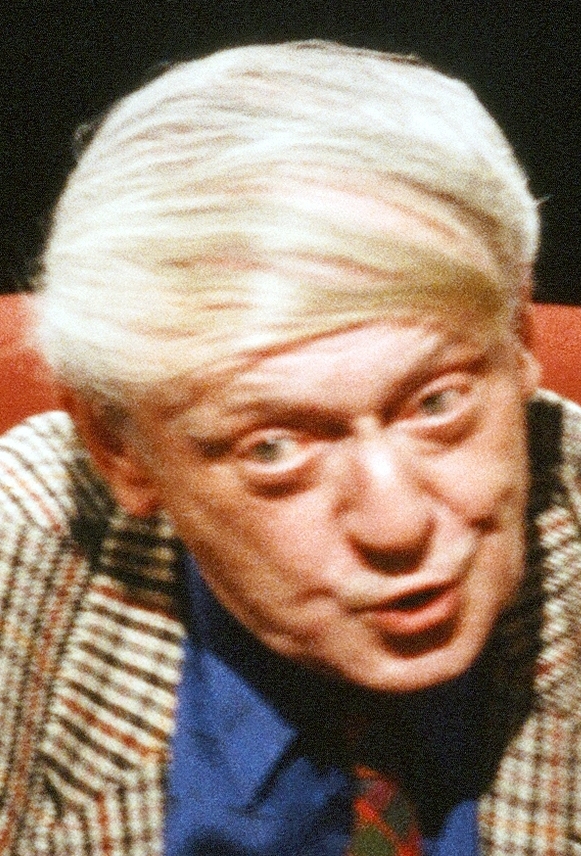
Anthony Burgess
English writer, screenwriter, and composer of A Clockwork Orange.

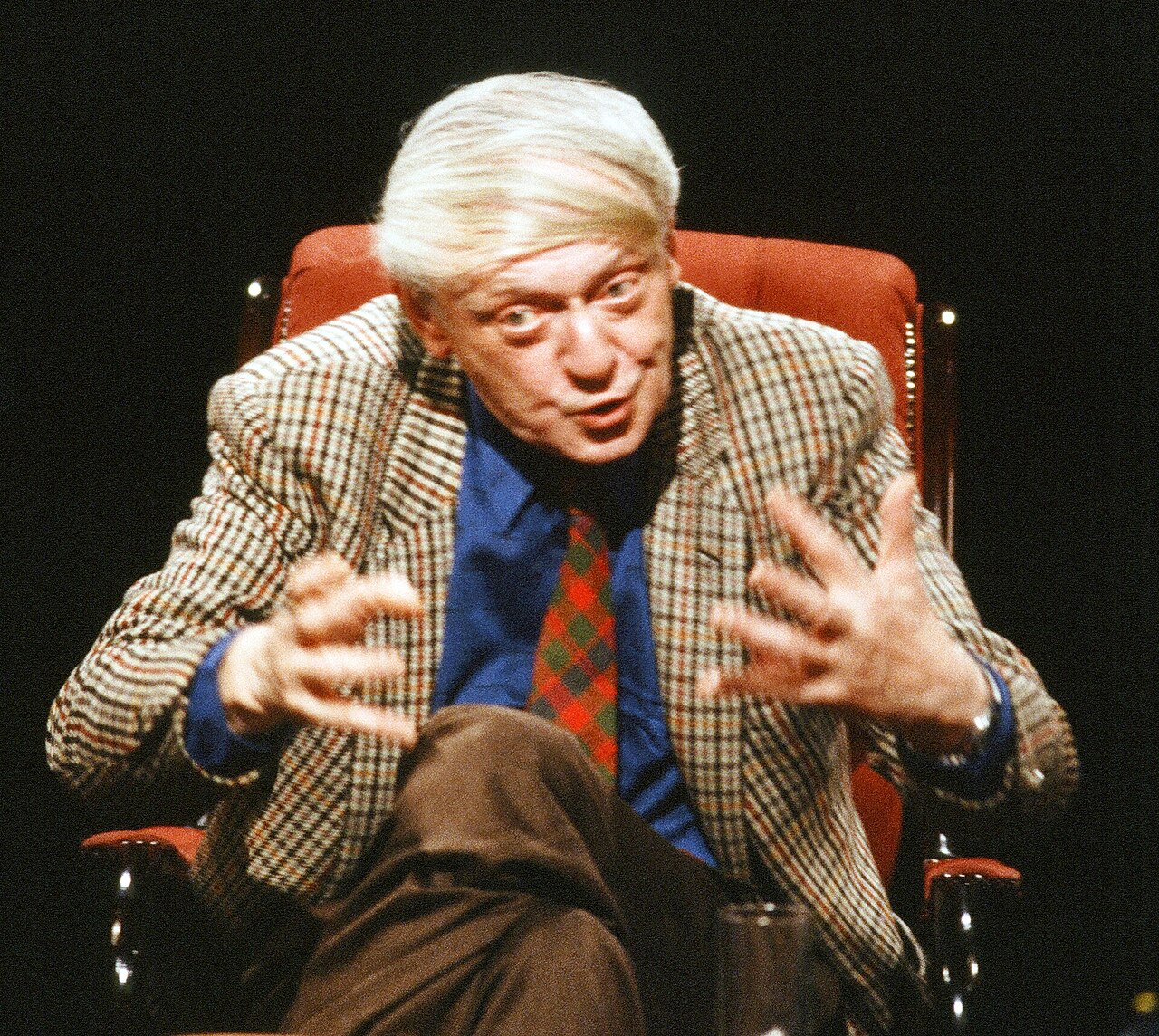
Matt Harrop · CC BY-SA 2.0
John Anthony Burgess Wilson (25 February 1917 – 22 November 1993), better known as Anthony Burgess, was an English novelist, composer, and screenwriter. He is most famous for his dystopian satire *A Clockwork Orange*, though his work was largely comic in nature. His other novels include the Enderby series and *Earthly Powers*. Burgess also wrote librettos and scripts, such as the 1977 television miniseries *Jesus of Nazareth*, and served as a literary critic for *The Observer* and *The Guardian*, producing studies of authors like James Joyce. A skilled linguist, he taught phonetics and translated works including *Cyrano de Bergerac*, *Oedipus Rex*, and the opera *Carmen*. He was shortlisted for the Nobel Prize in Literature in 1973. Additionally, he composed over 250 musical pieces and saw himself equally as a composer, though his writing brought him far greater recognition.
Burgess was born in Harpurhey, Manchester, to Irish Catholic parents Joseph and Elizabeth Wilson. He described his upbringing as lower middle class; during the Great Depression, his father and stepmother ran tobacconist and off-licence shops, doing well since demand for tobacco and alcohol stayed steady. As a child he was called Jack, Little Jack, and Johnny Eagle. He added the name Anthony at his confirmation, becoming John Anthony Burgess Wilson, and first used the pen name Anthony Burgess for his 1956 novel *Time for a Tiger*.
His mother Elizabeth died at home on 19 November 1918, aged 30, from influenza, acute pneumonia, and cardiac failure during the 1918 flu pandemic. His sister Muriel had died four days earlier, aged eight, from similar causes. Burgess believed his father resented him for surviving when his mother and sister did not. After his mother’s death, he was raised by his maternal aunt Ann Bromley in Crumpsall. His father worked as a bookkeeper by day and played piano in a pub at night; after marrying the pub’s landlady, Margaret Dwyer, in 1922, Burgess was raised by them. By 1924 the couple owned four properties in the tobacconist and off-licence trade, and Burgess briefly worked in the shop as a child. His father died in 1938 from cardiac failure, pleurisy, and influenza, leaving no inheritance, and his stepmother died of a heart attack in 1940.
Burgess recalled a largely solitary childhood, saying he was either persecuted or ignored. He attended Catholic elementary s
- born
- 25 February 1917, Harpurhey, Manchester, England
- died
- 22 November 1993
- field
- Writer, screenwriter, composer
- nationality
- English
- known_for
- A Clockwork Orange, Enderby quartet, Earthly Powers, musical compositions
Lore & Background
Burgess was born in Harpurhey, Manchester, to Irish Catholic parents. His mother and sister died during the 1918 flu pandemic when he was a child, and he was raised by his father and stepmother. He attended Catholic schools and later studied English language and literature at the Victoria University of Manchester, graduating with a Bachelor of Arts degree. He had originally hoped to study music but was turned down due to poor grades in physics.
During World War II, Burgess served in the British Army, first as a nursing orderly and later in the Army Educational Corps. He was stationed in Gibraltar, where he worked as a lecturer and was arrested in Spain for insulting General Franco. After the war, he taught at various institutions, including Banbury Grammar School, and began publishing novels under the pen name Anthony Burgess in 1956.
Burgess composed over 250 musical works and considered himself as much a composer as an author. He was a versatile linguist, lectured in phonetics, and translated works including Cyrano de Bergerac, Oedipus Rex, and the opera Carmen. He was nominated and shortlisted for the Nobel Prize in Literature in 1973.
Reader's Guide
Anthony Burgess is best known for A Clockwork Orange, a dystopian satire that has had a lasting impact on literature and popular culture. However, his output was vast and varied, encompassing novels, screenplays, librettos, musical compositions, and literary criticism. He worked as a critic for The Observer and The Guardian and wrote studies of classic writers, notably James Joyce. His linguistic abilities allowed him to translate major works from multiple languages. Despite his success as a writer, Burgess considered himself equally a composer, having written over 250 musical works. His legacy is that of a prolific and versatile artist whose work continues to be studied and adapted. He was nominated for the Nobel Prize in Literature in 1973, reflecting his standing in the literary world.
Did You Know?
- Burgess began using the pen name Anthony Burgess upon the publication of his 1956 novel Time for a Tiger.
- He composed over 250 musical works and considered himself as much a composer as an author.
- He was arrested in Spain for insulting General Franco while stationed in Gibraltar during World War II.
- Burgess was nominated and shortlisted for the Nobel Prize in Literature in 1973.
A Three-Week Masterpiece
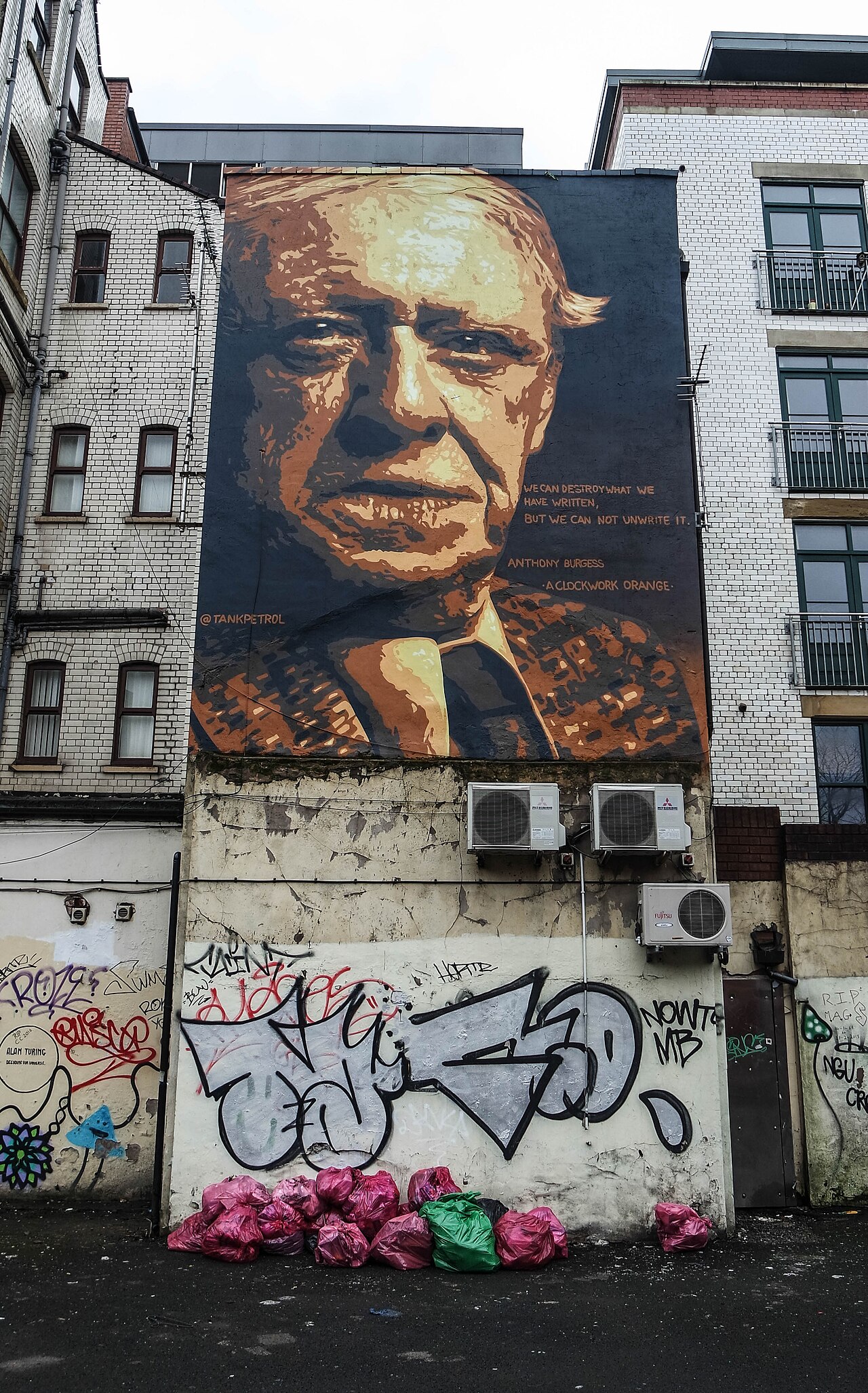
Anthony Burgess published A Clockwork Orange on 17 March 1962, yet by his own account the novel was conceived and completed as a mere jeu d'esprit, hammered out over a span of only three weeks. That breezy self-assessment belies the work's ambition: a near-future society riddled with a youth subculture devoted to what the text calls 'ultra-violence,' narrated in the first person by a teenage gang leader named Alex who recounts both his criminal spree and the state's attempt to rewire his mind. One of the book's most distinctive features is its invented vocabulary, Nadsat, an Anglo-Russian argot whose name derives from the Russian suffix that functions the way '-teen' does in English. This linguistic layer gives the prose a musical, street-level energy that sets it apart from other dystopian fiction of the era. Burgess's decision to write the entire novel in a compressed three-week burst suggests a writer channeling a very specific, urgent vision rather than laboring through a long drafting process, and the result reads less like a carefully engineered political allegory than like a fever dream given structure.
The Architecture of Alex's Story
The novel unfolds in three distinct movements. In the first, fifteen-year-old Alex leads a small gang of droogs—Dim, the slow-witted enforcer; Georgie, the ambitious number two; and Pete, the along-for-the-ride—through a night of escalating mayhem: assaulting a scholar, robbing a shop, and terrorising a young couple in a remote cottage. The husband is a writer whose unfinished manuscript bears the novel's title, and Alex contemptuously reads a paragraph before shredding the pages. His love of Beethoven, whom he dubs 'Lovely Ludwig Van,' threads through the violence as a counterpoint. The second part shifts to prison. Convicted of murder and facing fourteen years, Alex is offered the experimental Ludovico Technique: an aversion therapy pairing nausea-inducing injections with violent imagery until the thought of aggression triggers physical revulsion. The cruel irony is that the therapy's soundtrack includes Beethoven's Fifth, permanently robbing Alex of his greatest pleasure. In the third part, released and homeless, Alex is hunted by former gang members and eventually taken in by the writer F. Alexander, whose colleagues intend to weaponise his story against the sitting government.
Dystopian Legacy and Critical Acclaim
Few novels have carved out a comparable niche in the dystopian canon, and A Clockwork Orange is routinely cited as one of the most influential works in the genre. Its critical standing has been cemented by multiple high-profile honours: in 2005, Time magazine placed it on its list of the one hundred best English-language novels written since 1923, and separately, Modern Library—drawing on both editorial judgment and reader voting—named it among the one hundred best English-language novels of the entire twentieth century. More recently, in 2022, the novel was selected for the 'Big Jubilee Read,' a curated list of seventy books by Commonwealth authors assembled to mark the Platinum Jubilee of Queen Elizabeth II. That inclusion alongside works from across the Commonwealth underscores how the book has transcended its original English-language context to become a shared cultural touchstone. The combination of its inventive language, its unflinching portrait of adolescent violence, and its central question about whether a person can be 'cured' of free will has kept the novel in continuous conversation with readers, critics, and policymakers for over six decades.
The Manuscript's Journey to Canada
The physical artefact of A Clockwork Orange has found a permanent home far from the English-speaking world in which it was written. The original manuscript is held in the William Ready Division of Archives and Research Collections at McMaster University in Hamilton, Ontario, Canada. The institution acquired the documents in 1971, a mere nine years after the novel's publication, suggesting that the book's cultural weight was already being recognised by academic and archival communities well before it achieved its later canonical status. The fact that the manuscript resides in a Canadian university archive rather than in a British library or the author's own estate speaks to the international reach of the novel's influence and to the particular institutional interest McMaster's archives division took in preserving it. For researchers and literary scholars, the manuscript offers a tangible link to Burgess's famously rapid three-week writing process, and its preservation in a dedicated archival division ensures that the physical evidence of how the novel came into existence remains accessible for study.
Gallery
More in Science Fiction And Fantasy Writers 1-19
Spotted an error? Know more?
This is a living reference — every entry is fact-audited, and reader corrections feed straight into our audit queue. Suggest an edit · See this site's audit record